
Management Operating System experts
What is a Management Operating System?
A Management Operating System (MOS) is a structured framework of principles, processes, and tools that an organization uses to translate its high-level strategy into daily, frontline execution.
Think of it as the “central nervous system” of a business. It dictates how information flows, how decisions are made, how performance is monitored, how problems are solved and how the business improves day by day; another words how to turn every employee into problem solvers. Without a functioning MOS, strategy stays trapped in boardroom slide decks, frontline teams run on guesswork and the business stagnates.
Our Operational Principles
The MOS drives sustainable performance through four core principles:
- Connect Strategy to Purpose: We align frontline goals directly with overarching business strategy, ensuring every team understands their impact on the broader mission.
- Deliver Customer Value safely: We execute operations with a rigorous focus on safety, efficiency, and the precise delivery of client requirements.
- Discover & Deploy Better Workflows: We challenge the status quo, continuously identifying and embedding superior operational practices.
- Enable Full Potential: We empower individuals and teams, equipping them with the accountability and capabilities needed to maximize their contribution.

The Core Elements of an MOS
A robust MOS bridges the gap between goals and execution by connecting four essential pillars:
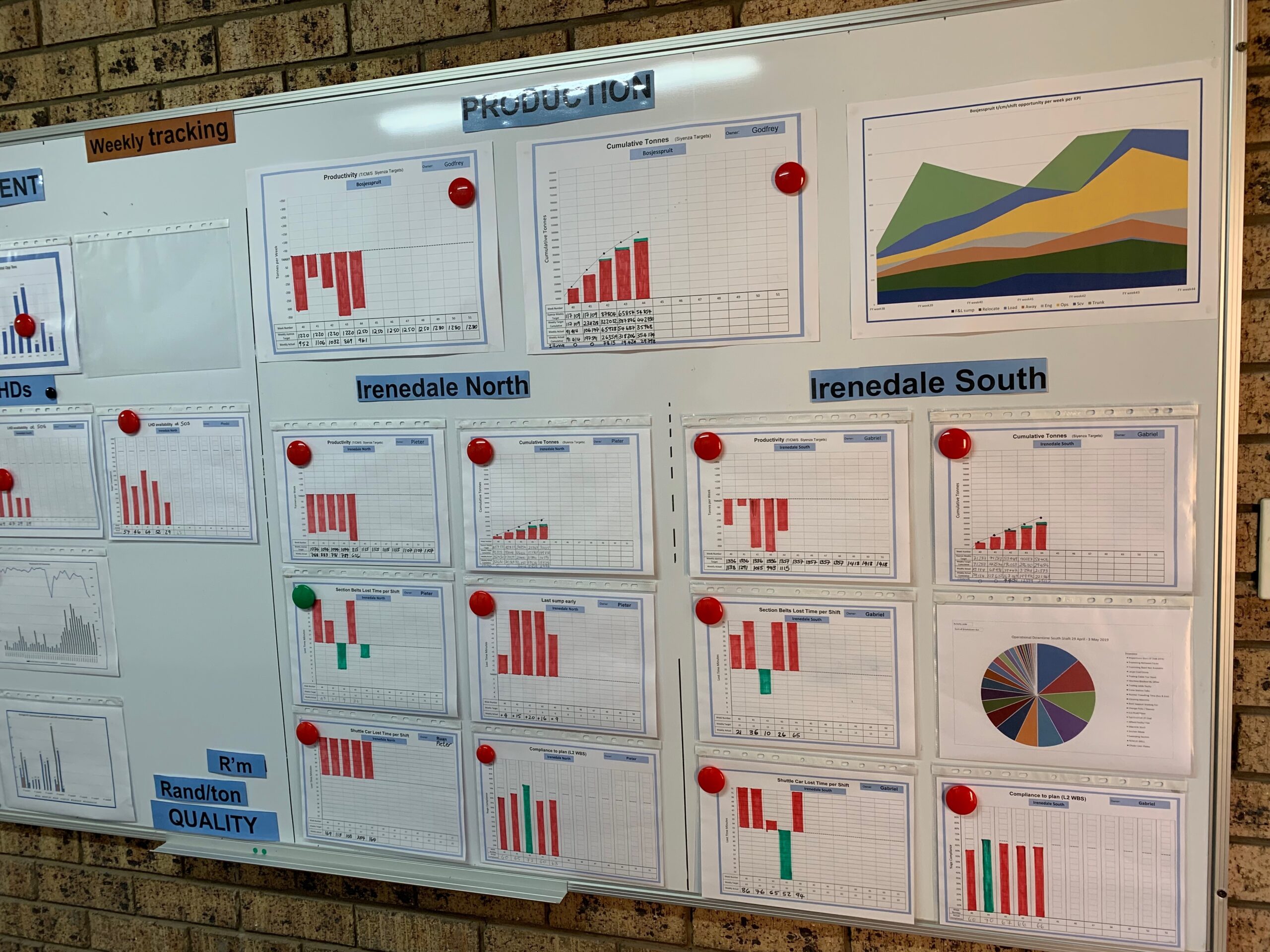
- Visual Management & Reporting
This is how performance is made visible. Instead of hiding data in complex spreadsheets, an MOS uses highly visual dashboards, KPI walls, or digital scorecards.
- The Goal: Anyone walking into a department should be able to tell within three seconds if the operation is “winning or losing” (ahead or behind schedule) for that day, what are the key focus areas for the day and what actions are being taken to address performance gaps.

2. Meeting & Communication Cadences
A MOS establishes a rigid, predictable rhythm of review meetings. These are not long, winding discussions; they are brief, action-oriented stand-ups designed to review performance against targets.
- Shift/Daily Huddles (Frontline): 10-15 minutes to review yesterday’s results, today’s targets, and safety and operational issues.
- Weekly Reviews (Tactical): Mid-level managers review weekly trends and allocate resources to solve recurring issues.
- Monthly Reviews (Strategic): Executives review macro performance, financial alignment, and long-term strategy.

3. Standardised Work & Playbooks
A MOS codifies operational practices so performance doesn’t depend on who is on shift. This includes standard operating procedures (SOPs), tactical playbooks, and defined roles and responsibilities. It ensures that the optimal way of running an asset or process is executed consistently every single time. It also includes plans to build team skills and capabilities.
4. Short-Interval Control (SIC) & Problem Solving
This is the mechanism used to course-correct in real time. Instead of waiting for the end of the month to realise production was low, an MOS uses Short-Interval Control to check performance every hour or at least every shift. If a metric dips, a standardised problem-solving process (like a 5-Why analysis or an A3 framework) is instantly triggered to fix the root cause.

Why MOS Matters (Especially for Constraints)
For companies focusing on maximizing throughput and optimizing bottlenecks, a Management Operating System is the ultimate tool.
- Prevents the “Local Optimisation Trap”: It aligns the KPIs of every department to support the primary value chain constraint, rather than letting departments optimise their own silos at the expense of the overall business.
- Creates Accountability: It defines exactly who owns which metric and what they must do when that metric fails.
- Drives Continuous Improvement: By constantly surfacing variances between actual performance and targets, it provides a steady stream of data-backed projects for your continuous improvement teams.
In summary:
A Management Operating System ensures that the right people have the right information, at the right time, to make the right decisions in order to meet the business targets.